
8 Weeks Out – Road to London 2026
A less informative, more reflective piece of mine as I prepare for the 2026 London Marathon.

I thought I’d write this piece to record my thoughts while running, and what’s been on my mind as I prepare for the 2026 London Marathon. It won’t be about the numbers and science - it will be more of a brain dump.
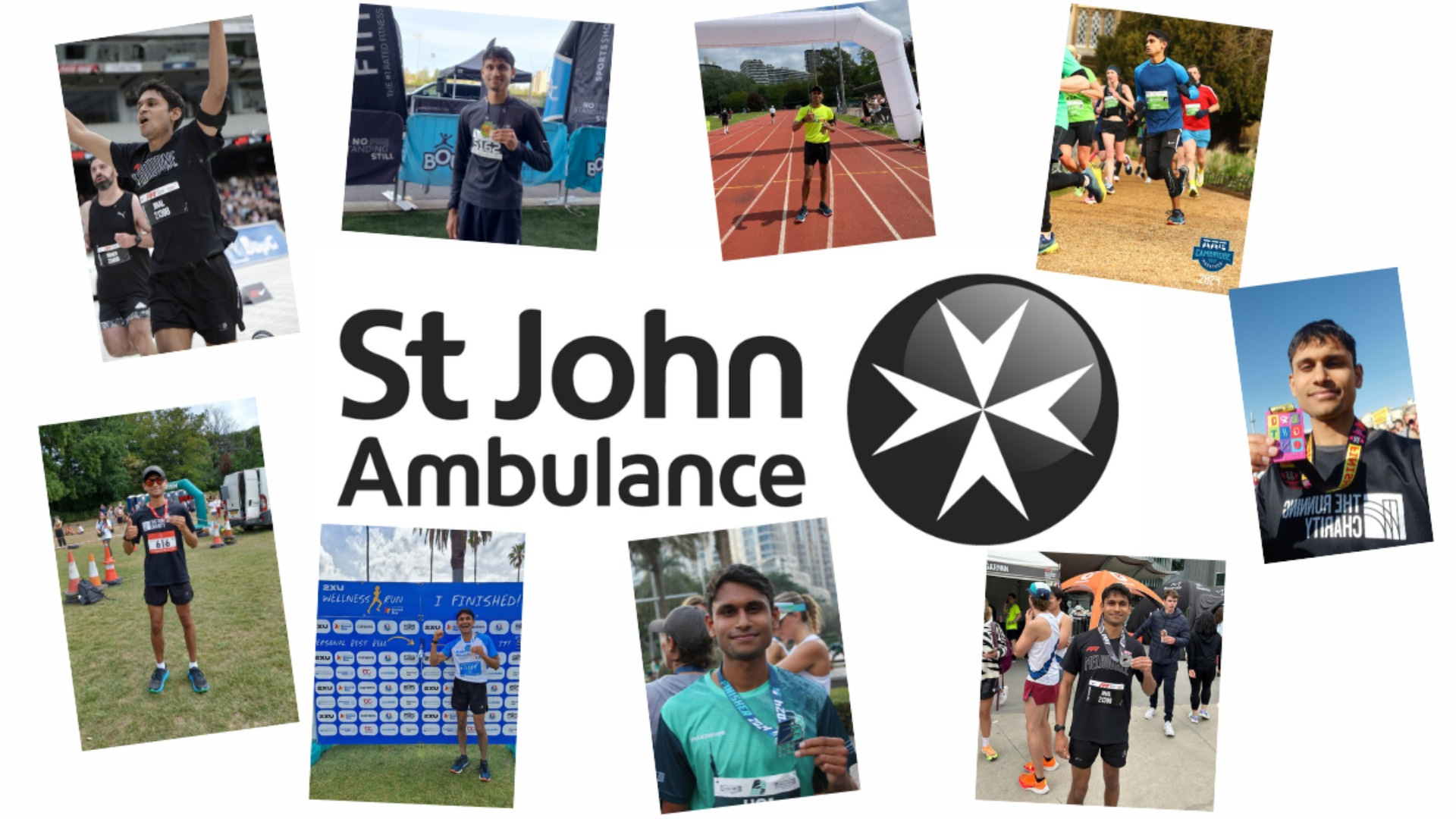
I’m also raising money for St John Ambulance in this marathon campaign, and donations are always welcome. This piece may lack structure or purpose, but I hope to highlight what goes on in a runner’s mind – my mind.
12 weeks of training complete, 8 weeks to go. Back in December 2025 as I was drawing up my training plan and sticking it to my bedroom wall, the task and event of London ’26 seemed ages away - 5 months - almost half a year. Yet as I write this, 8 weeks doesn’t seem like a lot of time. 3 months of training – 3 runs & 2 weight sessions a week has flown by, and I’m entering the period of soon peaking my weekly mileage in the next few weeks.
Compound interest doesn’t just apply to money
Compounding effects are real, and I’ve seen it with my training. Little by little, session after session you get better, and it’s only when you look back you realise how far you’ve come. Consistency pays off and works even when you don’t realise – in this training block to date I’ve run my second fastest (unofficial) half-mara, set a 5k PB, and lowered my resting heart rate. Not to mention the overall feeling of being a better runner. Even if on all those training runs (38 completed as I write this) there’s no medal or crowd cheering you on, the fact that I can see self improvement is good enough for me. As a colleague at work said – “Train hard, race easy”. We’ll see on the 26th of April if how it all pays off…
Visualise
Something I’ve done different this year in preparation is print off a physical copy of my training plan and stick it above my desk on my bedroom wall. These days, the world of apps and digitalisation is prominent. Everything is linked to your watch, phone, or app and your race plans are all on there. But there is something about crossing off a completed run or workout that you can’t beat. The satisfaction that you get knowing you can literally see yourself getting closer to your goal. I’ve enjoyed having my training plan up on my wall – it gives me clarity, removes decision making and keeps reminding me of my goal everyday.
Are runners selfish?
To train for London requires many hours , not to mention adequate sleep and nutrition. All for a completely optional goal that you set yourself, which only (directly) benefits you. Is this even logical? To train for a solo event like the marathon requires sacrifice – turning things down that you would usually jump at. For me, I said no to some very appealing travel plans, just because it didn’t align with my schedule. Social plans may become a hindrance for a few months rather than something you look forward to. Is this selfish or self centred? I’d love to hear from anyone reading this what they think. Because for me, if you want to achieve something badly, sacrifices will have to be made (even if for only a few weeks). It’s hard to do everything and expect to achieve great results.
Food & rest
Marathon training has taught me to better enjoy my de-load weeks and rest days. It’s not all about training, nutrition and recovery are equally important too. Funnily enough, I now look forward to my slow, easy runs, whereas before I would find them boring. For me, it’s also important that I have a healthy relationship with food during marathon training. You need to be able to fuel your workouts, and I absolutely enjoy having to eat without calorie counting or tracking. Following a plant-based balanced diet has worked for me so far (I’ve been vegan for 6 years now), and improvements are showing.
Be wary of social media– the cost of kudos
Strava is great – I love it. A non-addictive form of social media that I find hard to doom scroll on. Recently, I’ve realised more and more that excessive social media use makes me feel unregulated and unbalanced – a lot of highly charged, polarised and graphic content coming at you in huge amounts. Comparison is the thief of joy as they say – and this is the biggest downside of over-comparing and scrutinising others’ performance against your own. Comparing could make you feel good, but equally it could also sow doubts. I’ve been trying to be mindful of my social media use, reducing it and using it to connect with who I want to, not what the algorithm feeds me.
Fueling the engine
My fuelling strategy this year has been far better than last years, using the lessons I learned from completing Brighton Marathon (5hrs 10 min) and DNF’ing at London (I tapped out at mile 21 last year - more on that here). Gone are the cereal bars and sweets eaten at random times – in come the gels and electrolytes in measured, specific, engineered amounts. Practicing my fuelling has been important to check my gut can handle it, and also starts building the muscle memory for race day. 45 mins – first gel. Then a gel every 30 mins after that. This is the plan. Still got a few things to figure out, such as what I’ll be wearing to store gels (belt vs vest) and to try out the electrolyte gels, but that’s all due over the next 2 months.
Training Offshore
A peculiar part of my job is that occasionally I have to work offshore in the middle of the sea, which brings its own challenges when marathon training. The treadmill becomes my most used gym resource – and my biggest nightmare out there. Long runs become a chore rather than feeling free. Staring at the same piece of wall for multiple hours? Not fun. Training offshore I’ve found is a lot more mentally tough than on land. 12 hour shifts for an entire hitch (7 days a week for 3 weeks), then putting a couple of hours of training in the gym, and trying to get 8 hour sleep. Once you do the math, there’s not much time left in the day for other stuff. In some ways, this gives me a tunnel vision and focus – you’re here to work, train, sleep, and repeat. But don’t get me wrong, I’d much rather be out there on the roads running. To accommodate being away from home and travelling my training schedule and work rota have been synced up as best as I could. Do the hard training weeks and big runs on your time off. Taper and deload weeks (ideally) whilst offshore.
T - 8 Weeks
This will probably be the only below I write before the big day. I started this piece by mentioning I’m 8 weeks out from the 2026 London Marathon. So what happens in these next 2 months? My key weeks of training - the longest long run (34km), highest weekly mileage (58km) are all to look forward to. The final month before race day will be for tapering - activity levels reduce, but eating and rest continue. Glycogen levels build. Rest improves. Body regenerates. That’s the theory. But of course life isn’t theoretical.
Marathon excitement will certainly build - the buzz of London will return to the running community. Hopefully, I’ll hit my fundraising target of £2,000. Most importantly? I’ll continue to enjoy and trust the process.
See you at the start line.
J.S.